Pillar 04: Cultivating Green Gold-Field Inquiry on Agricultural Resilience & Relational Networks in Kamodani
Project Type: International Volunteer Workcamp & Field Inquiry
Affiliation & Program: NICE International Workcamp (Tokushima Oi-31 Project)
Field Location: Kamodani, Anan City, Tokushima Prefecture, Japan (徳島県阿南市加茂谷地区)
Timeline: August 2026
1. The Awakening: Stepping into an Aging Citrus Valley
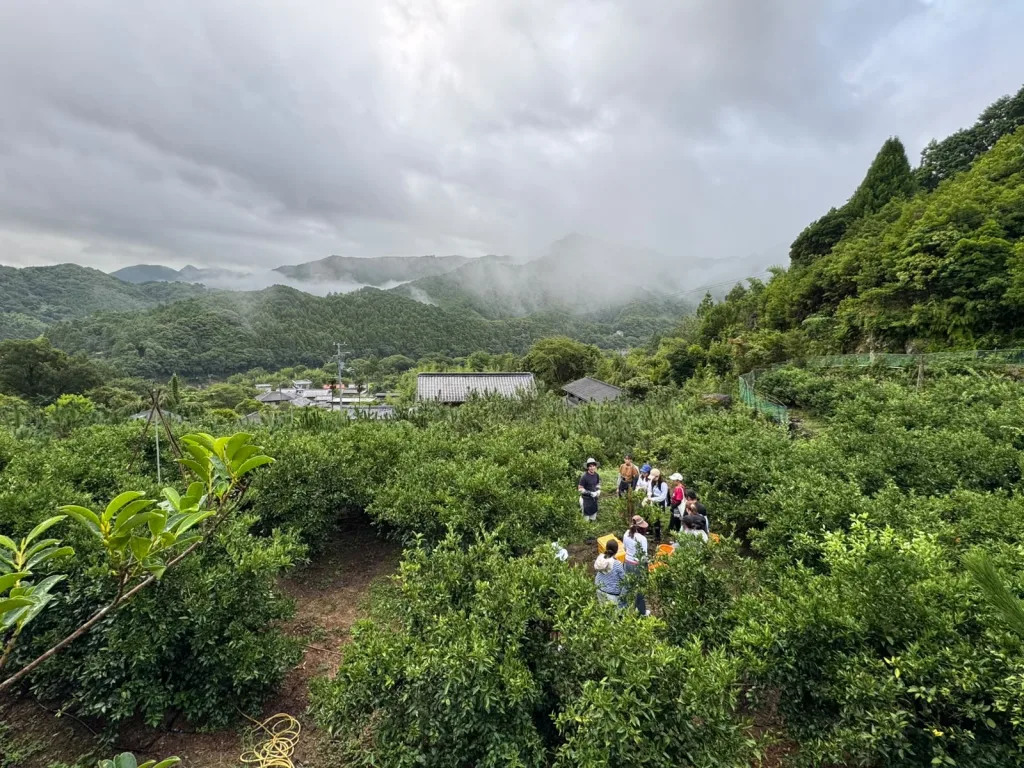
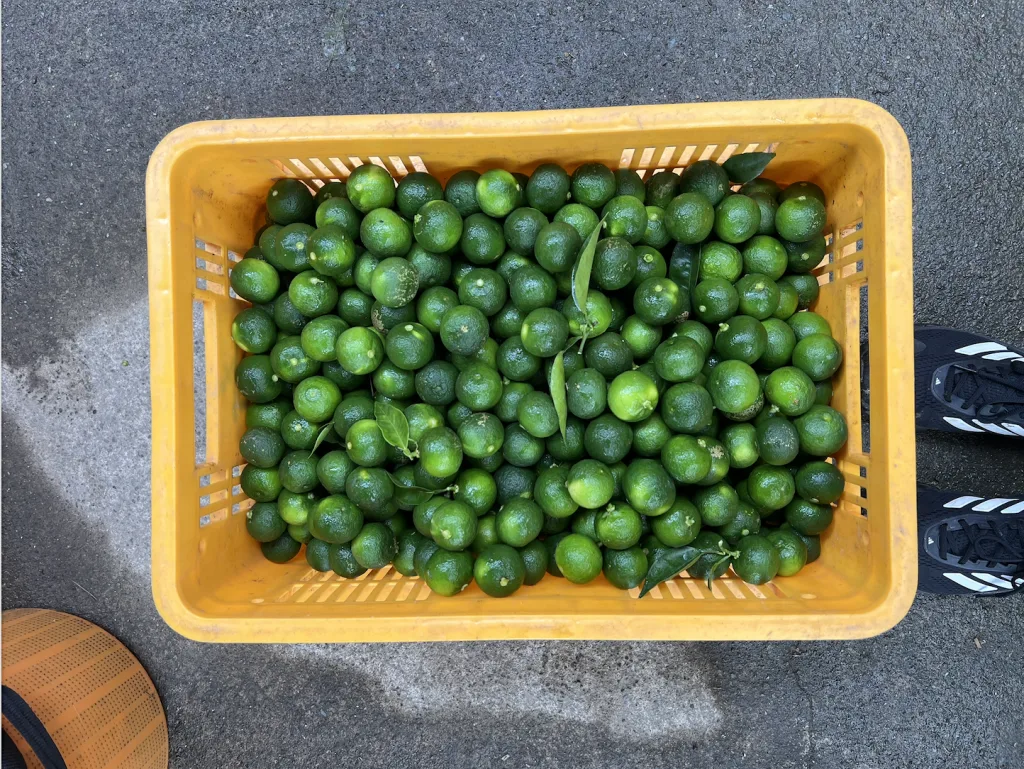
In the mountainous enclave of Kamodani along Tokushima’s Naka River, agriculture is the ancestral backbone of community identity. Tokushima produces over 90% of Japan’s Sudachi (すだち), a prized green citrus known as “green gold.”
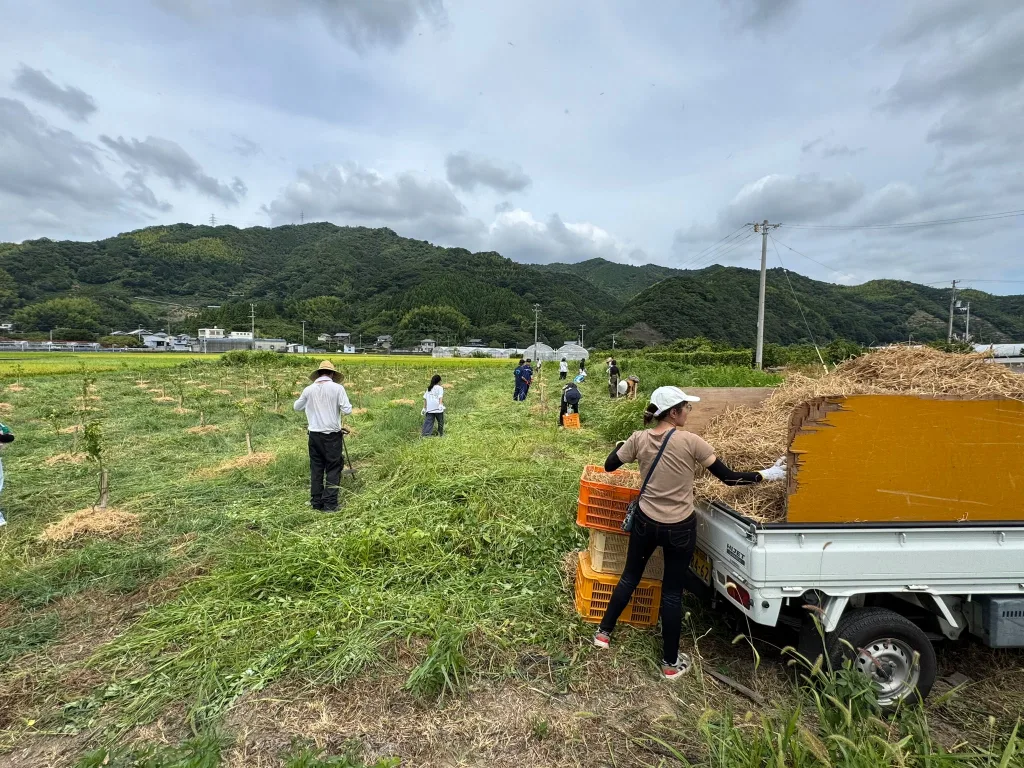
Yet, beneath this cultural heritage lies an acute structural vulnerability: severe hyper-aging and rural depopulation (限界集落). With the local farming demographic averaging over 70 years old and orchards situated on steep hillside slopes where mechanization is impossible, the critical August harvest window faces an insurmountable labor bottleneck. Unharvested fruit risks falling and rotting, eroding multi-generational livelihoods.
To understand how isolated rural areas navigate labor shortages without relying solely on state subsidies, I joined the NICE Oi-31 International Workcamp, embedding myself in grassroots agricultural work and community revitalization.
2. The Fieldwork Operations: Realities of Frontline Agricultural Labor
Our cohort comprised 16 international participants from 6 distinct cultures (Mexico, Japan, Taiwan, Thailand, Vietnam, France), working under local community coordination:
1.Precision Harvesting Under Weather Stress
Harvesting is a delicate, calibrated process. We utilized standardized circular wire gauges to measure fruit diameters on the branches, ensuring only mature, market-grade Sudachi were clipped. Even amidst heavy summer downpours, our squads maintained continuous harvesting on slick terrace slopes to salvage perishable yields within the peak seasonal timeframe.
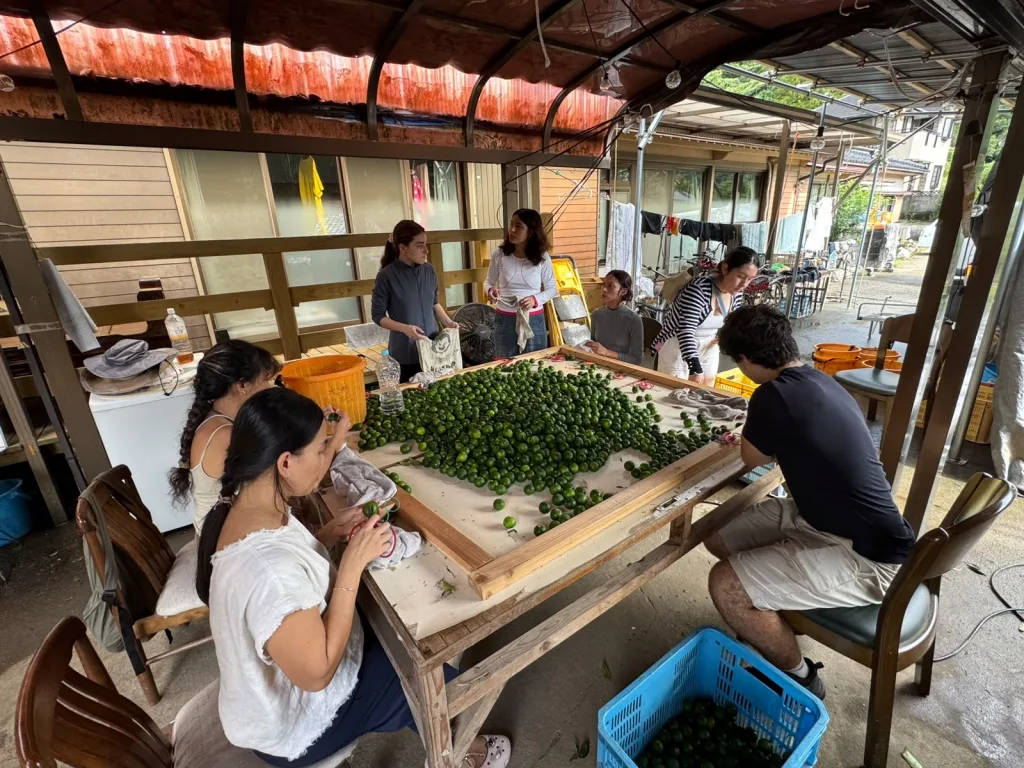
2.Post-Harvest Logistics & Quality Sorting
Transporting heavy crates down the hillside terraces to community sheds, we sorted harvested Sudachi by size, color consistency, and skin integrity, categorizing fruit for commercial retail versus regional processing.
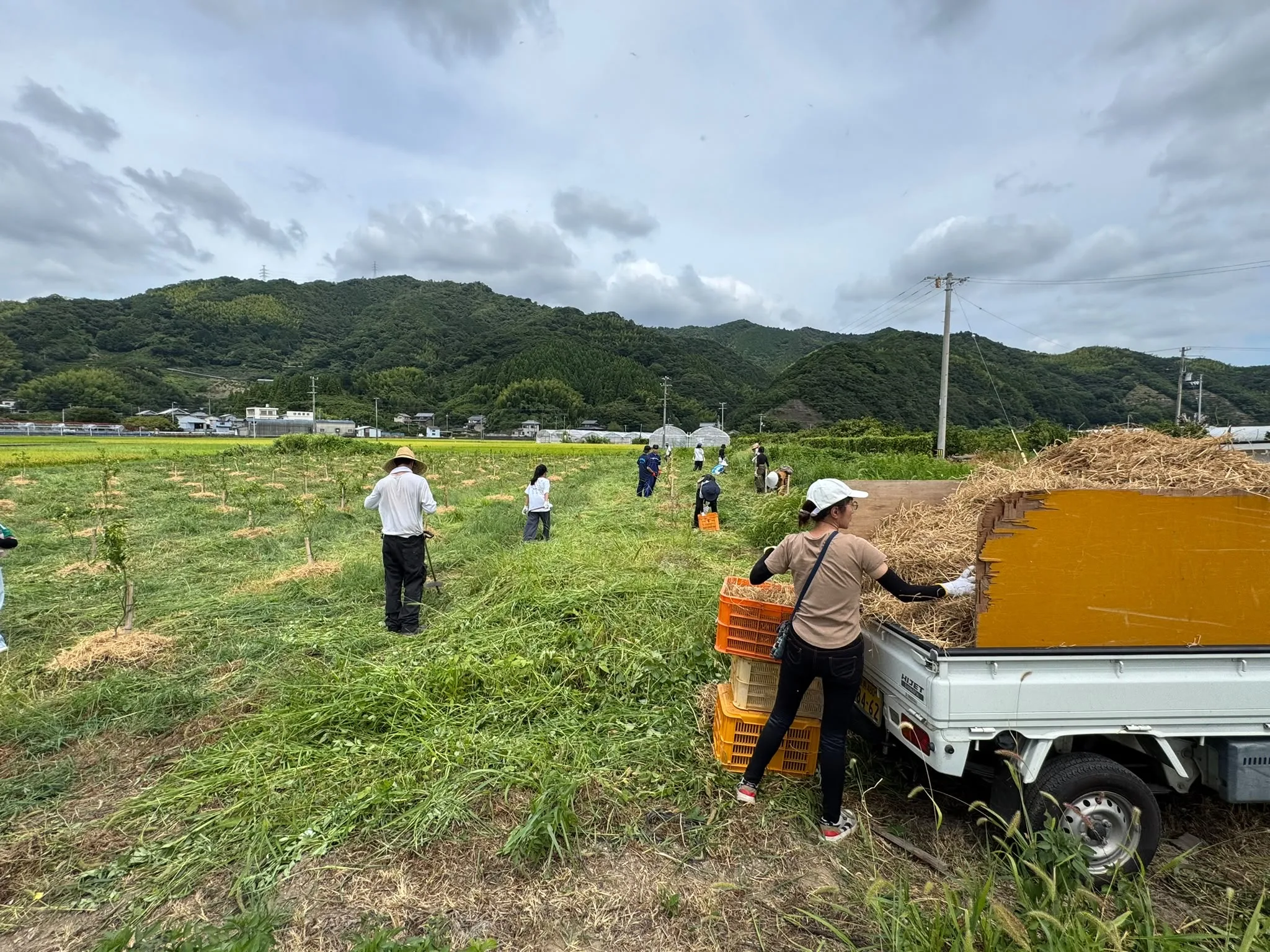
3.Ecological Straw Mulching (敷き藁):
Following sowing, we applied layers of dry rice straw mulch across the newly seeded beds. This traditional agroecological technique serves a vital dual function: insulating the delicate seedlings to retain crucial soil moisture during the intense summer heat while naturally suppressing weed proliferation without synthetic herbicides.
4.Reclaiming Community Space
Beyond agricultural fields, our team engaged in manual clearing and remediation of abandoned rural houses (空き家). Sorting through neglected interior structures transformed abstract concepts of rural abandonment into tangible physical spaces,illustrating the urgent need for community asset repurposing.
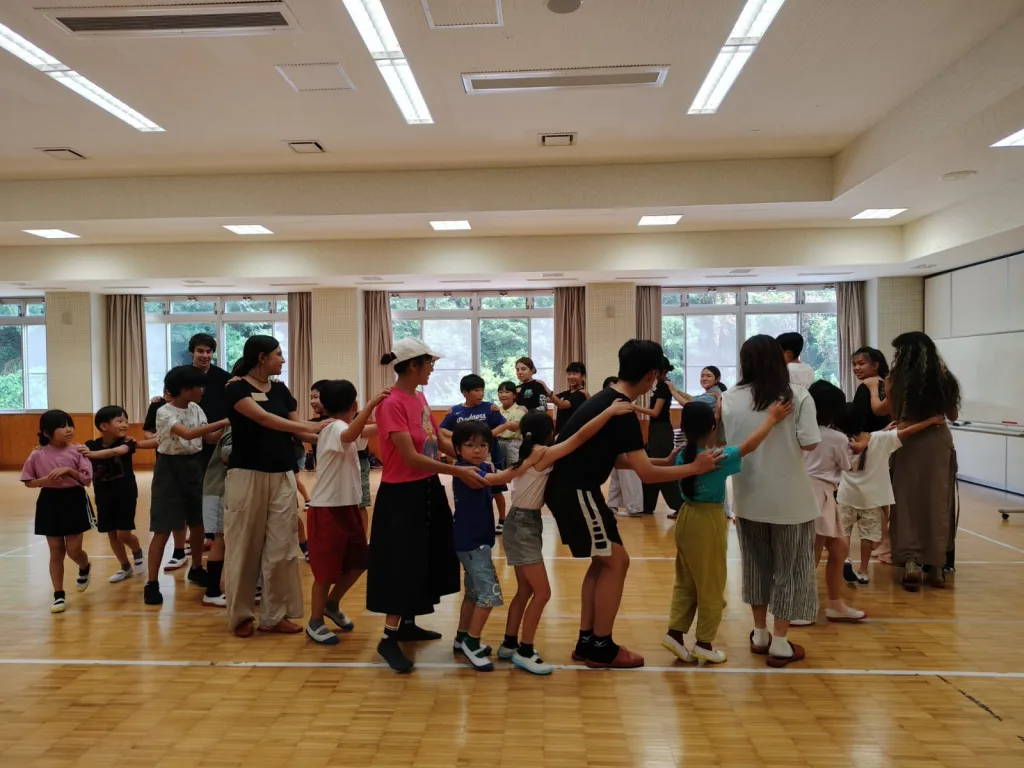
5.Intergenerational & Youth Engagement
At the local community center, we designed interactive game workshops for Japanese elementary school students. This intergenerational exchange bridged isolated rural youth with global perspectives, creating an organic civic commons for cultural dialogue.
3. Cross-Cultural Collisions: Redefining Labor, Life Pathways, and Identity
Communal living and shared farm labor became an incubator for profound cross-cultural dialogue, challenging cognitive biases and reshaping my perspective on career pathways:
Diverse Life Trajectories vs. Linear Career Expectations:
Conversations during daily logistics revealed radically diverse life paradigms. Interacting with Antoine, a 26-year-old French geoscientist who resigned from conventional industry roles across Norway and Ireland to recalibrate his values through long-term volunteering, and a 28-year-old Thai civic worker operating remotely across global borders, completely dismantled my assumption of rigid, single-track career success.
Deconstructing Cultural Narratives:
Discussions on work-life philosophy—such as debating the Western boundary between labor and personal rest versus East Asian high-intensity work ethics—highlighted how socio-cultural environments sculpt individual agency.
Societal Structures in Rural Japan:
Dialogues with local Japanese facilitators surfaced candid insights into rural patriarchal family dynamics, traditional expectations, and the generational frictions driving youth migration toward urban metropolises.
4.Analytical Synthesis: The Power of “Relational Population” (関係人口)
Living at the intersection of international volunteers and local farmers illuminated the organizational architecture necessary for sustainable regional revitalization:
The Fallacy of Permanent Relocation (移住の限界):
Traditional municipal policies fixate almost exclusively on convincing urbanites to permanently relocate—a high-friction expectation that struggles against modern economic realities.
Cultivating Relational Ties (関係人口の創出):
Kamodani Net successfully fosters an intermediate tier of “Relational Population”—individuals who may not reside in the village year-round, but contribute recurring seasonal labor, digital advocacy, and persistent social capital.
Reciprocal Social Value:
This model thrives on mutual empowerment: volunteers resolve urgent agricultural labor bottlenecks and revitalize fallow assets, while aging villages provide profound cultural grounding, intergenerational mentorship, and authentic community belonging.
Epilogue: Looking Ahead
From Orchard Fieldwork to Participatory Policy Design
Beyond the physical strain of steep-slope harvesting and the logistical precision of fruit grading, Kamodani challenged my fundamental assumptions about modern development. In an era dominated by rapid urban concentration, shrinking peripheral valleys reveal the vulnerabilities of our centralized economic model. Watching local NPOs dynamically orchestrate international human capital to rescue a harvest demonstrated that community resilience is an ongoing practice of co-creation (協創)
This inquiry taught me that effective policy begins where theoretical models meet ground-level soil. Whether revitalizing aging agriculture in Shikoku or addressing metropolitan vulnerability in Taipei, my goal at the university level is to combine epistemological fieldwork, civic network design, and comparative regional strategy to design actionable policies that empower vulnerable communities to thrive in an aging world.
Fieldwork Partner & Local Initiative:
Collaborated with local revitalization partners and agricultural networks in Kamodani, Anan City, Tokushima (Kamodani Sudachi Project).
